Guide 7 · 4 min read
Measuring accurately
Get reliable numbers from scales, cylinders, pipettes and pH tests.
What you will learn
- Weighing small amounts
- Measuring volume
- Strips or a meter for pH?
- Write it down
Weighing small amounts
Measuring volume
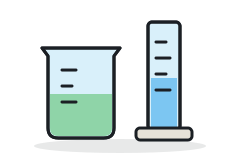
Beakers are for holding and mixing; their markings are rough. For an accurate volume, use a graduated cylinder and read the bottom of the curved liquid surface at eye level. For very small volumes, an adjustable micropipette is more precise.
Strips or a meter for pH?
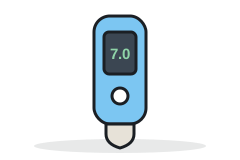
Test strips are quick, cheap and good for a rough check. A digital meter gives a precise number, but it needs calibrating with buffer solutions, and its probe must be kept moist between uses.
Write it down
Record each measurement as you take it. A number you try to remember later is a number you cannot trust.
Quick check
Supplies mentioned
As an Amazon Associate I earn from qualifying purchases. Affiliate Disclosure
- View on Amazon: Digital Milligram Scale (opens in a new tab)
Most kitchen scales only read to the nearest gram; small amounts need a scale built for them.
- View on Amazon: Laboratory Glassware Set (opens in a new tab)
Beakers for holding and mixing, cylinders for accurate volumes: the core of most bench work.
- View on Amazon: pH Test Strips (opens in a new tab)
The quickest rough pH check, with nothing to calibrate or charge.
- View on Amazon: Digital pH Meter (opens in a new tab)
When a strip is not precise enough, a calibrated meter gives a value you can record.
- View on Amazon: General Lab Tool Set (opens in a new tab)
Small steel tools handle dry materials cleanly and wipe down easily between uses.